

University Education Portal
University Specialties in Engineering Sciences, Technology and Architecture
1. Introduction: The Technical Bridge between Engineering and Medicine to Preserve Human Life
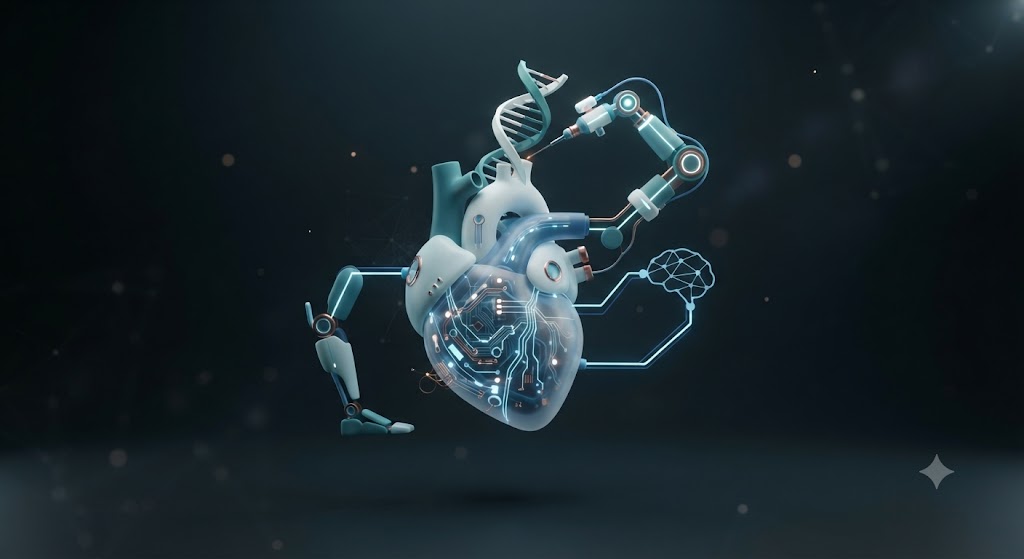
The specialty of Biomedical Engineering (Génie Biomédical) stands as one of the most modern, noble, high-tech, and rapidly expanding branches of technical education. Operating as the absolute operational link between hard quantitative sciences and clinical medicine, this discipline focuses on the art and science of designing, developing, analyzing, auditing, and maintaining complex diagnostic, therapeutic, and life-support instrumentation that modern healthcare infrastructure relies upon to save lives. Far beyond routine equipment repair, contemporary biomedical engineering fuses advanced microelectronics, machine learning, computer vision, and biocompatible materials science. Choosing this premium pipeline within the national university matrix yields outstanding cross-functional technical capability, ensuring immediate, high-impact career celerity across healthcare facilities, multinational medical technology vendors, and advanced research bodies. Updated academic and safety regulatory guidelines are delivered through engineering departments and national medical device auditing boards.
2. Admission Requirements: The Academic Gateways to Biomedical Engineering
Admission into biomedical engineering departments within Algerian universities follows a highly competitive merit-based selection at the conclusion of the foundational Sciences and Technologies (ST) Common Core framework. Due to the multi-disciplinary requirements of the curriculum, selection targets top-tier students, routing them into specialized national poles of excellence, including: **The University of Tlemcen** and **The University of Science and Technology of Oran (USTO - Mohamed Boudiaf)**. Academic streams are prioritized under MESRS standards as follows:
- Priority 1: Technical Mathematics (specifically the electrical or mechanical engineering concentration) and pure Mathematics (the definitive foundational stream for differential equations, complex network calculus, and biosignal processing).
- Priority 2: Experimental Sciences (the ideal foundational pool for human anatomy, molecular biology, and biochemistry).
3. Curriculum and Duration: Technical Specializations and Biophysical Progressions
The engineering pipeline spans **3 years for the Bachelor's degree (Licence) and 2 years for the Master's degree (LMD System)**, running parallel with the elite **5-year integrated State Engineer degree** deployed within prominent higher polytechnic matrices and university engineering departments. The educational matrix flows through structural phases:
- **Medical Instrumentation & Advanced Electronics:** Intensive coursework covers comprehensive Analog and Digital Electronics circuit design, physics of physiological sensors (**Biosensors**), bio-amplifier engineering, medical telemetry, and the electrical hardware design of embedded medical devices.
- **Medical Image & Signal Processing (Traitement d'images):** The technical curriculum places severe structural emphasis on programming applied to advanced **Signal Processing**, mathematical algorithms for 3D image reconstruction, computer vision, and optimizing pixel analysis for X-ray, MRI, and ultrasound imaging matrices.
- **Biomechatronics & Prosthetic Design (Biomécanique):** Coursework includes multivariable mechanics of materials (RDM) applied to human structural anatomy, joint kinematics, gait analysis, and researching tissue-compatible materials (**Biomaterials**) to engineer functional artificial limbs and bionic implants.
4. Master's Specialties, Educational Innovation, and the 12-75 HealthTech Decree
At the graduate level, the curriculum splits into high-value specialized engineering concentrations tailored to active global markets: **Biomedical Instrumentation Systems**, **Medical Imaging and Signals**, and **Biomechanics and Biocompatible Materials**. In coordination with national economic strategies focused on technology integration, final-year engineering students can deploy the **12-75 ministerial decree (diploma-startup)**. This allows innovative students to channel their graduation project (PFE)—such as developing connected telemedicine devices, programming AI-driven diagnostic screening algorithms, or prototyping low-cost smart myoelectric prosthetics—into high-growth technology start-ups (HealthTech), fully backed by university business accelerators.
5. Career Prospects and Corporate Enterprise Partner Networks in Algeria
Biomedical engineering graduates possess highly specialized, critically demanded analytical and electronic capabilities that guarantee **immediate recruitment, total job security, and premium positioning** across healthcare networks and industrial tech sectors:
- **Public & Private Healthcare Facilities:** Operating as clinical biomedical engineers within University Hospital Centers (CHU) and private medical complexes, auditing real-time safety logs, managing asset inventory, and directing the protective maintenance of heavy diagnostic assets (including multi-slice CT networks, high-tesla MRI scanners, and operating-theater telemetry systems).
- **Multinational Medical Technology Corporations:** Securing prestigious technical roles as field service engineers, application specialists, or medical infrastructure consultants for global healthcare technology giants operating footprints locally (such as Siemens Healthineers, GE Healthcare, Philips, Canon Medical).
- **Pharmaceutical Industries & Centralized Laboratories:** Managing automated chemical analytical lines, high-throughput micro-fluidic arrays, and metrological calibration for public industrial benchmarks like Saidal and international pharmaceutical manufacturing complexes.
- **Sovereign Testing Boards & R&D Centers:** Joining national research laboratories (such as the CDTA) or public medical regulatory agencies executing conformity testing, electrical safety audits, and device certification parameters.
- **Targeted Professional Roles:** Biomedical Hospital Engineer, Field Service Engineer (FSE), Clinical Applications Specialist, Prosthetics Design Engineer, and HealthTech Project Director.
6. Graduate Profile: The Strategic Alliance of Hard & Soft Skills
- **Technical Skills (Hard Skills):** Mastery of industry-standard EDA software and scientific programming suites (MATLAB, LabVIEW, AutoCAD, Proteus), microelectronics circuit troubleshooting, advanced metrological equipment calibration, and strict execution of medical electrical safety, leakage current metrics, and radioprotection codes (HSE / healthcare standards).
- **Human Skills (Soft Skills):** **Absolute operational accuracy, high ethical responsibility, and absolute emotional composure** (as an incorrectly calibrated bio-amplifier or a radiation output error directly compromises human life safety), outstanding analytical problem-solving (Problem Solving), excellent cross-functional communication to serve as the structural link between medical staff (physicians, surgeons) and technical crews, and high learning agility.
7. Strategic Vision
“Choosing the Biomedical Engineering major means mastering the ultimate quantitative tools of technology to serve the noble preservation of human life. Here, where advanced microelectronics, signal processing, and material mechanics converge with clinical medicine to architecture dawning diagnostic systems and bionic prosthetics, you will forge the definitive technical versatility and executive execution required to lead a highly prestigious, stable, and borderless career path.”