

Advice and Guidelines
Advice and guidance for teachers
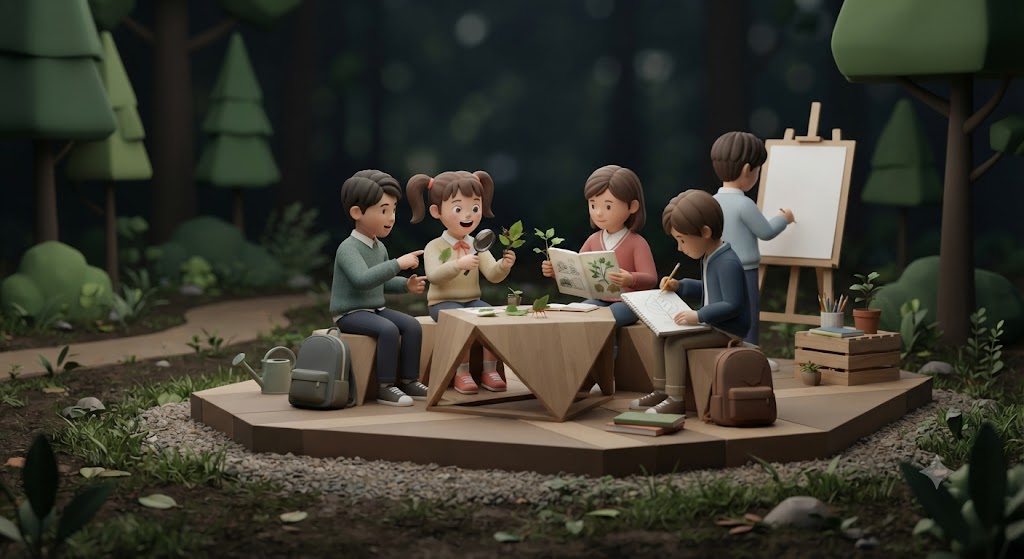
Outdoor learning is an educational approach that encourages the use of the outdoor environment as a source of knowledge and learning experiences. Here are some ideas on how students can benefit from this approach:
-
Environmental exploration: Take field trips to parks, forests, beaches, and other natural places. Let students observe and interact with plants, animals, and natural phenomena.
-
Interactive lessons: Teach traditional subjects like science and math outdoors. Students can calculate sun angles and analyze the impact of the environment on wildlife.
-
Learning through play: Use outdoor games and educational activities to promote interaction and engaging learning. Such as treasure hunts and group games.
-
Environment and responsibility: Give lessons on environmental protection and social responsibility towards nature. Students can participate in cleaning natural areas and planting trees.
-
Stories and poetry: Read stories and poetry outdoors. Students can write their own stories about their experiences in the natural environment.
-
Learning through dialogue: Pose thought-provoking questions that stimulate students to discuss and think critically about what they see and experience.
-
Emphasize social interaction: Use the outdoor environment to foster collaboration and build relationships among students. Let them work on group projects.
-
Arts and crafts: Organize educational activities that encourage creativity and arts outdoors, such as painting and sculpting.
Outdoor learning has many benefits, including enhancing environmental awareness, promoting health, and stimulating curiosity. Teachers can integrate this approach into curricula to make education more enriching and experiential.