

University Education Portal
University Specialties in Engineering Sciences, Technology and Architecture
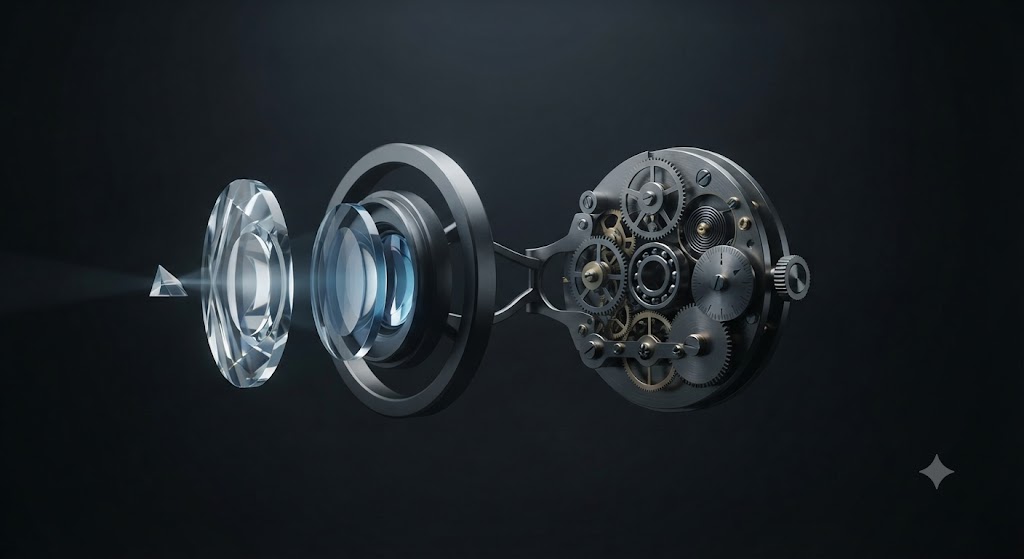
1. Introduction: The Technical Core of Nanotechnology, Advanced Photonics, and High-Precision Micro-Engineering
The specialty of Optics and Precision Mechanics Engineering (including Photonics, Optoelectronics, and Micro-Systems Calibration) stands as one of the most exclusive, high-tech, and strategically critical branches of engineering education in Algeria. Operating as the absolute operational link between advanced wave physics and micro-scale mechanical transformation, this discipline focuses on the art and science of designing, modeling, manufacturing, and calibrating high-precision optical components, advanced laser networks, and micrometric mechanical systems. Far beyond routine lens alignment, contemporary precision engineering architectures everything from electron microscopes and celestial telescopes to laser-guided automation nodes, fiber-optic sensory arrays, and sub-micron medical instrumentation. Choosing this elite pipeline within the national university matrix yields outstanding cross-functional capability, ensuring immediate, premium career celerity across advanced manufacturing, biomedical sectors, and strategic defense frameworks. Updated structural academic and metrological guidelines are managed through specialized higher institutes and university engineering departments.
2. Admission Requirements: The Academic Gateways to Polar Optical Specialization
Admission into optics and precision mechanics engineering departments within Algerian universities follows a highly competitive merit-based selection at the conclusion of the foundational Sciences and Technologies (ST) Common Core framework. Due to its unique technical density, this branch is historically and exclusively centralized as a national and continental hub within the prestigious **Institute of Optics and Precision Mechanics at the University of Sétif 1 (Ferhat Abbas)**. Academic streams are prioritized under MESRS standards based on academic tracking and available seats, targeting top-tier students with robust wave physics, geometry, and mechanical analytics capabilities as follows:
- Priority 1: Technical Mathematics (specifically the mechanical or electrical engineering concentration) and pure Mathematics (the definitive foundational stream for quantum mechanics, multi-variable calculus, differential physical grids, and wave propagation).
- Priority 2: Experimental Sciences.
3. Curriculum and Duration: Technical Specializations and Micrometric Systems Progressions
The engineering pipeline spans **3 years for the Bachelor's degree (Licence) and 2 years for the Master's degree (Génie Optique / LMD System)**, running parallel with the elite **5-year integrated State Engineer degree** deployed within the polar institute of Sétif to prepare laboratory superintendents and high-precision quality auditors. The educational matrix flows through structural phases:
- **Physical Optics & Laser Technologies:** Intensive core modules cover geometric and physical optics, solid-state semiconductor physics, industrial high-power Laser systems engineering, advanced telecommunication fiber optics, and real-time digital light-signal processing.
- **Micromechanics & Computer-Aided Manufacturing (CAM):** Detailed coursework covers micro-structural mechanical pre-dimensioning, micro-mechanical stresses, execution of tight geometric and dimensional tolerances (Metrology), and high-end 3D CAD/CAM software suites.
- **Optoelectronics & Precision Automation:** Designing piezoelectric micro-actuators, nanoscale automated positioning loops, advanced optoelectronic tracking sensors, and high-precision mechatronic system integration.
4. Master's Specialties, Educational Innovation, and the 12-75 DeepTech Decree
At the graduate level, the curriculum splits into high-value specialized engineering concentrations tailored to active global markets: **Optics and Photonics Engineering**, **Control Engineering and Metrology**, and **Materials and Micro-systems Engineering**. In coordination with national frameworks focused on technology integration, final-year engineering students can deploy the **12-75 ministerial decree (diploma-startup)**. This allows innovative students to channel their graduation project (PFE)—such as designing low-cost optical biomedical diagnostic sensors, constructing industrial laser measurement nodes, or programming AI-driven robotic micro-positioning platforms—into high-growth technology start-ups (DeepTech / HighTech), fully backed by university business accelerators.
5. Career Prospects and Sovereign Enterprise Partner Networks in Algeria
Optics and precision mechanics engineering graduates possess highly specialized, critically demanded analytical and metrological capabilities that guarantee **immediate recruitment, premium positioning, and near-zero competitive friction** due to the high scarcity of this professional engineering profile in the marketplace:
- **Advanced Optical & Eyewear Manufacturing:** Leading continuous production lines, coating laboratories, and quality assurance processes within public and private optical manufacturing complexes and lens certification centers.
- **Biomedical Diagnostics & Surgical Instrumentation:** Serving as certified application and maintenance engineers within University Hospital Centers (CHU) and international medical tech vendors, auditing and calibrating surgical lasers, high-resolution electron microscopes, and advanced endoscopy grids.
- **Industrial Automation, Energy & Hydrocarbons:** Managing and calibrating advanced spectroscopic analyzers, laser interferometers, and fiber-optic telemetry sensor networks across the refining complexes, gas liquefaction lines, and pipelines of national energy giants like Sonatrach and Sonelgaz.
- **Strategic Industries & National Defense Infrastructure:** Joining the high-technology testing complexes, modification laboratories, and structural maintenance facilities of the Ministry of National Defense (ANP) as civilian state engineers or military technical officers managing military optronics, night-vision networks, radar sub-modules, and laser guidance systems.
- **Targeted Professional Roles:** Optical Systems Engineer, Metrology and Calibration Specialist, Micromechanical CAD/CAM Designer, Laser Systems Engineer, High-Precision QA/QC Manager, and University Research Professor.
6. Graduate Profile: The Strategic Alliance of Hard & Soft Skills
- **Technical Skills (Hard Skills):** Mastery of industry-standard optical and mechanical simulation software suites (Zemax, SolidWorks, AutoCAD), calculating sub-micron dimensional tolerances, operating high-end laboratory metrological hardware (interferometers, profilometers), and implementing strict laser radiation industrial hazard safety metrics (HSE).
- **Human Skills (Soft Skills):** **Absolute mathematical accuracy, infinite experimental patience, and microscopic attention to detail** (as a structural alignment error of a single micrometer completely invalidates optical parameters, causing extreme operational liabilities), outstanding analytical troubleshooting (Problem Solving), strong cross-functional communication, and rapid learning agility.
7. Strategic Vision
“Choosing the Optics and Precision Mechanics Engineering major means mastering the ultimate quantitative laws of light and micro-systems to architecture the advanced high-tech components of tomorrow. Here, within the historical national hub of Sétif, where quantum photonics, advanced metrology, and micro-mechatronics converge to engineer guided lasers, ultra-fast fiber pathways, and high-performance micro-devices, you will forge the definitive technical exclusivity and execution required to lead a highly prestigious, stable, and borderless career path.”