

University Education Portal
University Specialties in Engineering Sciences, Technology and Architecture
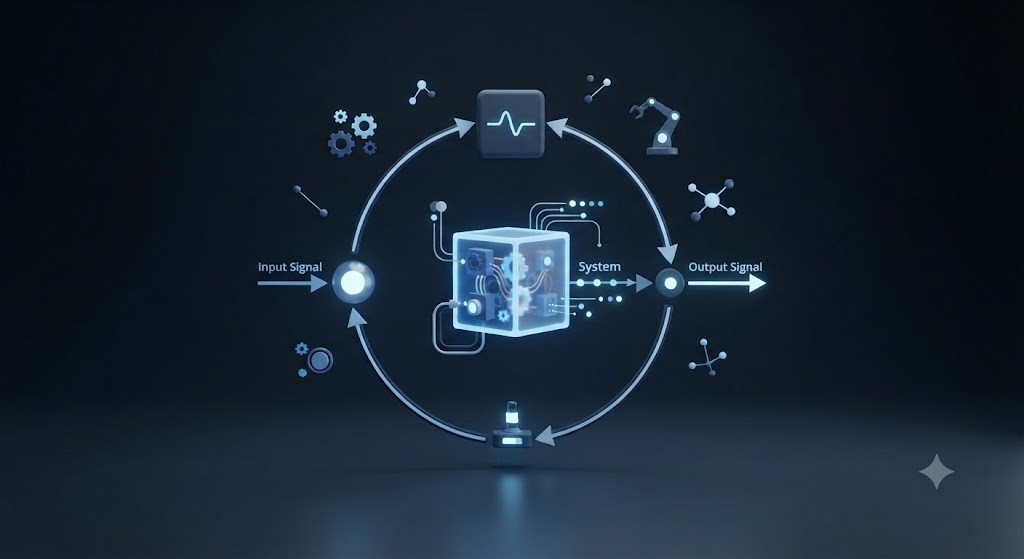
1. Introduction: The Brain of Modern Industry and the Elite Architect of Self-Regulating Cyber-Systems
The specialty of Automation Engineering (Control Systems and Industrial Computing) stands as one of the most advanced, high-tech, and strategically vital branches of technical education. Operating as the absolute operational intelligence behind **Industry 4.0**, this discipline focuses on the art and science of designing, modeling, programming, and securing intelligent closed-loop control systems that enable massive industrial plants and complex machinery to operate and regulate autonomously without human intervention. Far beyond routine electrical wiring, contemporary automation engineering masterfully fuses software engineering, advanced system dynamics mathematics, and robotic kinematics. Choosing this premium pipeline within the national university framework yields outstanding cross-functional capability, ensuring immediate, high-impact career celerity within major energy, manufacturing, and aerospace complexes. Updated academic and corporate technical tracking frameworks are structured through higher polytechnic institutes and university engineering departments.
2. Admission Requirements: The Academic Gateways to Automation Specialization
Admission into automation engineering departments within Algerian universities follows a competitive merit-based selection at the conclusion of the foundational Sciences and Technologies (ST) Common Core framework. Academic streams are prioritized under MESRS standards based on academic tracking and available seats, targeting students with sharp mathematical, computational, and system dynamics capabilities as follows:
- Priority 1: Technical Mathematics (specifically the electrical engineering concentration) and pure Mathematics (the definitive foundational stream for differential state-space matrix modeling, complex variables, and linear system analysis).
- Priority 2: Experimental Sciences.
3. Curriculum and Duration: Technical Specializations and Autonomous Systems Progressions
The engineering pipeline spans **3 years for the Bachelor's degree (Licence) and 2 years for the Master's degree (LMD System)**, running parallel with the elite **5-year integrated State Engineer degree** deployed within prominent higher polytechnic institutes (such as the National Polytechnic School - ENP or ENST). The educational matrix flows through structural phases:
- **Core Control Systems & Quantitative Sciences:** Intensive coursework covers advanced Control Systems Theory (Théorie des systèmes), numerical dynamic modeling and simulation, digital signal processing, linear and non-linear control algorithms, and sampled data systems.
- **Industrial Automation & Robotics:** The technical curriculum places extreme emphasis on programming and configuring industry-standard **Programmable Logic Controllers (PLCs / API)**, designing Distributed Control Systems (DCS) and SCADA/HMI supervisory architectures, industrial power electronics, network communication protocols, and multi-axis industrial robotics.
4. Master's Specialties, Educational Innovation, and the 12-75 Industrial Decree
At the graduate level, the curriculum splits into high-value specialized engineering concentrations tailored to active global markets:
- **Industrial Automation & Computing (Informatique Industrielle):** Integrating complex plant networks, fieldbus systems, advanced factory instrumentation, and embedded process control deployment.
- **Robotics & Mechatronic Systems:** Design, path-planning, and smart programming of autonomous robotic arms, automated guided vehicles (AGVs), and intelligent unmanned systems.
- **Advanced Control & Predictive Diagnostics:** Implementing non-linear robust control, fuzzy logic, neural networks, and AI-driven predictive maintenance algorithms to optimize high-stakes industrial pipelines.
In coordination with national economic strategies focused on corporate technology implementation, final-year engineering students can deploy the **12-75 ministerial decree (diploma-startup)**. This allows innovative students to channel their graduation project (PFE)—such as developing automated sorting lines using computer vision, programming industrial IoT telemetry nodes, or constructing smart robotic inspection rovers—into high-growth technology start-ups (Industrial Tech), fully backed by university business accelerators.
5. Career Prospects and Promised Job Security within Algeria's Industrial Infrastructure
Automation engineering graduates possess highly versatile, critically demanded analytical and physical capabilities that guarantee **immediate placement and absolute job security** post-graduation, as automation forms the definitive core of all modern factory floors:
- **Energy, Oil & Gas Megaprojects:** Operating as automation engineers, DCS supervisors, or instrumentation specialists within the massive gas liquefaction complexes, petroleum refineries, and pipeline networks of the national energy giant Sonatrach, as well as multinational energy conglomerates.
- **Mass-Scale Food Processing Industries:** Managing, tuning, and scaling continuous automated manufacturing, bottling, and high-speed packaging lines for dominant national agrifood groups (such as Cevital, Ifri, Soummam).
- **Automotive Assembly & Heavy Mechanical Manufacturing:** Programming, calibrating, and maintaining heavy robotic welding and assembly lines within commercial automotive manufacturing plants and defense industrial complexes.
- **Pharmaceutical Processing & Smart Packaging:** Supervising highly regulated, precision-automated manufacturing loops and environmental scada networks (clean rooms) within advanced pharmaceutical facilities (such as Saidal and international groups operating locally).
- **Targeted Professional Roles:** Automation Engineer, PLC Systems Integrator, Industrial Instrumentation Engineer, Control Systems Analyst, Factory Maintenance Superintendent, and Industry 4.0 Project Director.
6. Graduate Profile: The Strategic Alliance of Hard & Soft Skills
- **Technical Skills (Hard Skills):** Complete operational control and programming of industrial PLCs (Siemens TIA Portal, Step7, Schneider Unity Pro, Allen-Bradley), low-level and high-level coding (Ladder, Grafcet, C++, structured text), multi-variable simulation software (MATLAB/Simulink), SCADA/HMI network engineering, and executing strict industrial safety standards and machine protection rules (HSE).
- **Human Skills (Soft Skills):** **Exceptional system analytical capabilities, sharp logical deduction, and immense composure** (as diagnosing a critical plant-floor fault demands instant, stress-resistant precision to prevent multi-million currency production downtime), outstanding troubleshooting (Problem Solving), strong cross-functional leadership, and a proactive multi-disciplinary engineering approach.
7. Strategic Vision
“Choosing the Automation Engineering major means mastering the definitive operational intelligence of technology to command the factories of the future. Here, where mathematical algorithms, industrial computing, and electrical power converge to run entire industrial complexes with a single click, you will forge the definitive technical versatility and executive execution required to lead a highly prestigious, stable, and borderless career path.”